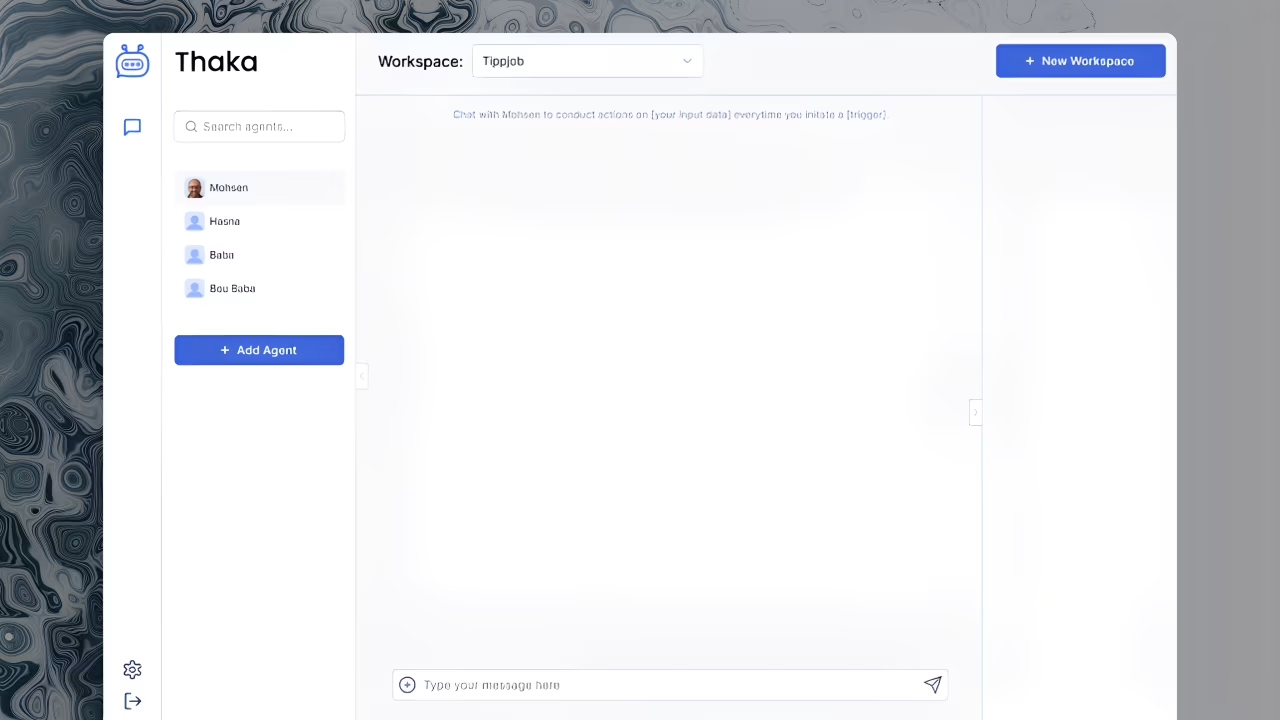
Designing Dhaka AI: Bridging the Gap Between Technical and Non-Technical Users
July 1, 2024
Overview
Dhaka AI is a collaborative web platform designed to empower both technical and non-technical users in project management and integration workflows. Created during my graduation internship at CodeCooperation, the platform addresses a common industry challenge: enabling inclusive, understandable, and efficient collaboration on complex software projects.
Key Features
AI-Assisted Workflow: Simplifies repetitive technical tasks and presents technical outputs in an accessible format for non-technical stakeholders.
User-Centric Design: Focused on delivering a clean, responsive interface that supports real-time collaboration and improves usability across roles.
End-to-End Project Management Tools: Integrated planning, modeling, and collaboration features to support each stage of the project lifecycle.
Robust Software Architecture: Leveraged modern web technologies with a modular, scalable backend and clean frontend structure.
Technologies Used
Next.js: For building a responsive, dynamic, and SEO-optimized frontend.
NestJS: For a scalable and maintainable backend architecture.
Prisma ORM & MySQL: To manage and persist data efficiently with a well-defined relational schema.
OpenAPI: For integrating AI components and ensuring clean, standardized API definitions.
DigitalOcean: Used for deploying and hosting the application in a cloud environment.
SCRUM Methodology & UML Diagrams: For agile project delivery and system modeling.
Challenges and Learnings
The core challenge was designing a unified platform that effectively served both technical developers and non-technical stakeholders. This required balancing detailed features with intuitive interfaces, which we achieved through extensive UI/UX testing and iterative feedback. I also deepened my understanding of scalable architectures (MSC Stack), continuous integration/deployment (CI/CD), and agile methodologies.
Outcome
Dhaka AI successfully demonstrated the feasibility of creating a dual-audience collaboration platform. It highlighted the power of AI in enhancing developer productivity while making technical insights accessible. The project was a key component of my graduation and allowed me to directly apply my full stack engineering skills to solve real-world problems in a company environment.